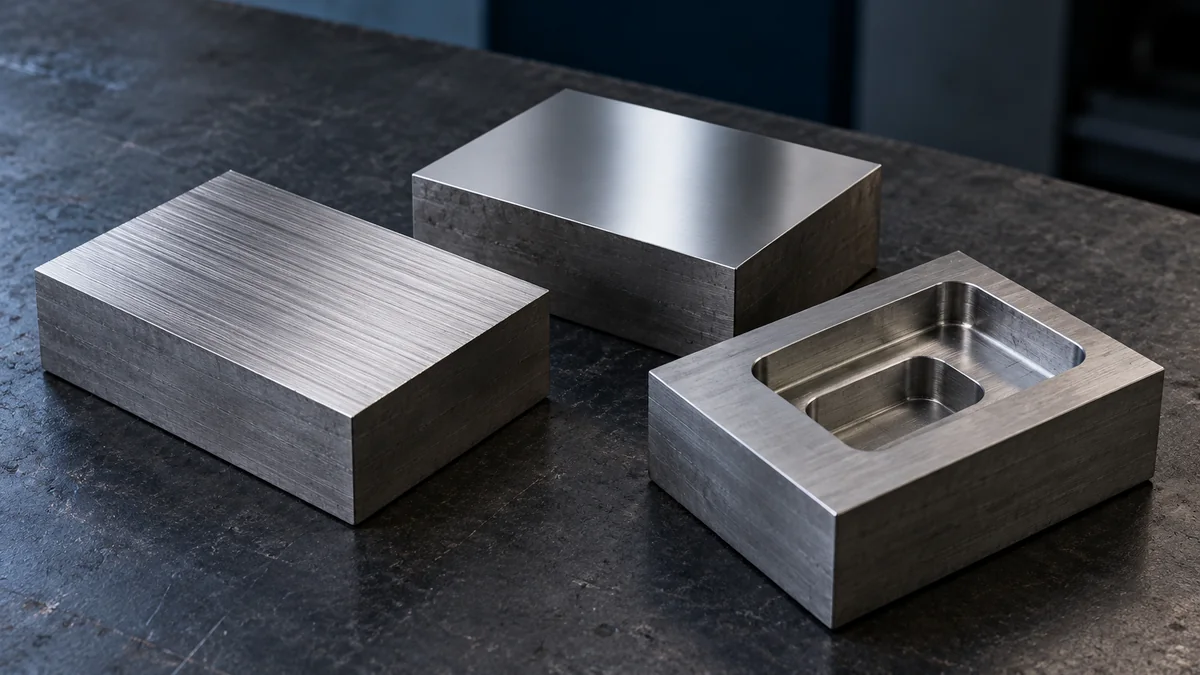
Choosing mold steel is a requirements decision before it is a purchasing decision. Two molds with similar external dimensions may need different cavity materials because the resins, surface requirements and maintenance conditions differ. A familiar steel name helps start the discussion, but it does not establish the material specification or predict the number of acceptable parts a tool will produce.
Use the following framework to prepare a material discussion with the toolmaker and your molding team. It is general guidance, rather than a recommendation for a particular part or a statement about any supplier’s inventory.
1. Define the environment the steel will see
Start with the exact resin grade, including reinforcement, pigments and additives. A material family alone is incomplete: two grades within that family can present different processing and tooling requirements. Ask the resin producer about processing temperatures, drying and any tooling considerations associated with its formulation. Keep those recommendations with the RFQ so that proposed materials can be evaluated against the same inputs.
Then describe the production environment. Consider coolant quality, storage conditions, planned shutdowns and access for cleaning. Corrosion on molding surfaces and corrosion in cooling circuits create different problems, so a requirement for corrosion resistance should identify the surfaces and conditions of concern. Material selection does not replace maintenance planning.
2. Separate steel designations from product names
P20 and H13 are general steel designations. Producer products can be modified compositions or supplied in specific conditions. Uddeholm describes Impax Supreme as a prehardened mold steel and identifies its relationship to P20 and 1.2738. That is information about a named product, rather than proof that every steel sold under a related designation has identical properties. See the Impax Supreme product reference.
Commercial labels such as 718H need the same care. Obtain the exact producer name, datasheet and delivery condition. ASSAB 718 HH is a specific product with its own documentation. Do not substitute a loosely similar name without checking the proposed material specification and obtaining agreement.
3. Compare prehardened and hardenable routes
Prehardened steel can allow machining in its supplied condition, avoiding a separate bulk-hardening step in the planned route. Hardenable tool steels introduce a different sequence: machining allowance, heat treatment, dimensional correction and finishing must be considered together. Neither route is automatically the better choice.
Ask how the proposed route fits the geometry. Thin steel sections, deep details and large changes in section thickness deserve attention when discussing processing and distortion. Record the intended final condition and how it will be verified. A steel name without a delivery or final hardness requirement leaves important decisions unresolved.
4. Treat polish and texture as engineering requirements
Specify the desired surface finish on the relevant faces, along with a physical reference or an agreed finish standard where appropriate. A glossy cosmetic face and a textured grip can lead to different finishing concerns. Do not rely on descriptions such as “high polish” without defining what the finished part needs to look like.
NAK80 is a Daido Steel trade name, rather than a generic standard designation. The producer discusses polishability, machinability and processing considerations on its NAK80 technical site. Those characteristics can inform a discussion, but they do not guarantee a particular optical or cosmetic result. The entire surface preparation route still matters.
5. Evaluate corrosion and wear separately
A corrosion-resistant choice is not necessarily the optimum wear-resistant choice, and increasing hardness can introduce tradeoffs elsewhere. Ask which failure mechanism is driving the proposed material. Is the concern abrasive resin, degradation products, moisture during storage, edge damage or repeated maintenance? A useful selection explains the concern and the compromise.
“S136” appears in commercial tooling discussions, but the label should not stand in for producer identification or a material certificate. If a corrosion-resistant product such as Stavax ESR is proposed, evaluate its actual datasheet. Do not assume equivalence between a commercial label and a branded product. ASSAB’s download center provides product-specific documentation for comparison.
6. Consider local requirements within the mold
The cavity, core, slides and replaceable wear areas need not all be specified as one material. Review which features control the part’s function and which areas may require future repair or replacement. This can make the material discussion more precise than asking for a single “premium steel” for the complete mold.
For H13-related options, verify the proposed product and processing route. BÖHLER’s W302 ISOBLOC reference identifies H13 and describes a remelted product with its own characteristics. Its inclusion in a comparison does not establish that another H13 product has the same cleanliness, finish response or supplied condition.
7. Write a specification that survives handover
Before approval, assemble the information in a short material schedule: component, producer product, applicable designation, supplied condition, final treatment, surface requirements and verification documents. Include the approval procedure for substitutions. Keep the schedule aligned with the mold drawing revision so that purchasing and manufacturing are working from the same decision.
Discuss the expected production plan and maintenance responsibilities as well. Steel selection alone cannot establish tool life; geometry, molding conditions, cooling, handling and maintenance all affect the outcome. Agree how wear or damage will be assessed and which components should be serviceable. The goal is a material choice that can be explained and checked throughout the project.
Sources and further reading
These are producer references for named products and processing considerations. Confirm the current datasheet and suitability for the specific application.